Exterior Surfaces
Pressure Washing vs. Soft Washing: Which Does Your Surface Need?
By Solpath Window Detailing · Published · Updated
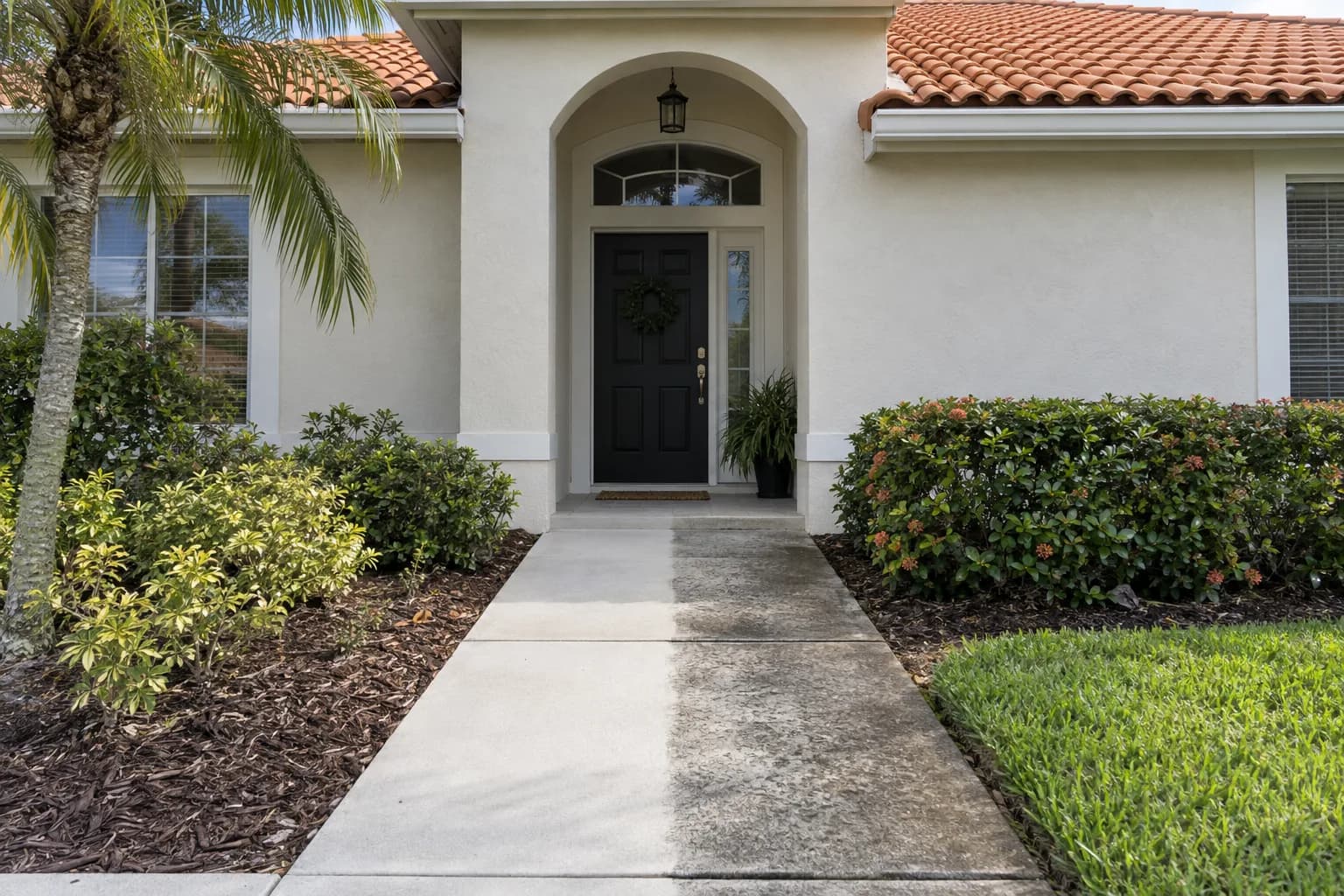
Pressure washing uses high-pressure water and suits hard surfaces such as concrete driveways, pavers, pool decks and unpainted masonry. Soft washing uses low pressure and a cleaning solution, and suits roofs, stucco, painted siding, screen enclosures and anything high pressure would crack, strip or force water into. Most South Florida homes need both, on different surfaces.
Which surface takes which method
| Surface | Method | Why |
|---|---|---|
| Concrete driveway and sidewalk | Pressure washing | Concrete takes pressure, and a surface cleaner gives an even finish |
| Pavers | Pressure washing, with care | Pressure lifts dirt and growth, and some joint sand comes out with it |
| Pool deck | Pressure washing, gentler on coated decks | Bare concrete takes it; coatings and paint can lift |
| Tile roof | Soft washing | Pressure cracks tile and drives water underneath |
| Shingle roof | Soft washing | Pressure strips the granules that protect the shingle |
| Stucco walls | Soft washing | Pressure forces water into the wall and can mark the finish |
| Painted siding and trim | Soft washing | Pressure lifts paint and drives water behind boards |
| Screen enclosure | Soft washing | Mesh tears and the spline that holds it pops out |
| Windows, frames and seals | Neither: washed by hand | Water forced past a seal ends up inside the frame or the wall |
Why pressure is the wrong tool on a roof or a wall
The damage from pressure washing a roof or a wall rarely shows on the day. Water driven under a tile or behind a crack in the stucco sits there, and it turns up months later as a stain inside, a soft spot or paint that lifts.
Most of the staining on South Florida roofs and walls is algae and mildew growing into the surface. Blasting takes off the top layer and leaves the rest, so it grows back quickly. A solution that kills the growth is what keeps a surface clean for longer.
Soft washing is not a weak pressure wash
In soft washing the solution does the cleaning. It is applied at low pressure, given time to work, and rinsed off. The water is there to carry the solution and rinse it away, not to scour the surface.
Plants next to the work are wetted down first and rinsed again afterward, so they do not soak up the solution.
Warning signs when you hire someone
- An offer to pressure wash a tile or shingle roof
- A wand used across flat concrete instead of a surface cleaner, which leaves stripes
- No plan for the plants along the walls
- No mention of anything they will not clean, or why
Rust stains are a separate problem
Orange staining along the bottom of walls and across driveways usually comes from sprinklers running on well water. It is iron, not dirt, and neither method removes it on its own. It needs a rust treatment, and it comes back until the water is dealt with.