Exterior Surfaces
Can Oil Stains Be Removed From a Driveway?
By Solpath Window Detailing · Published · Updated
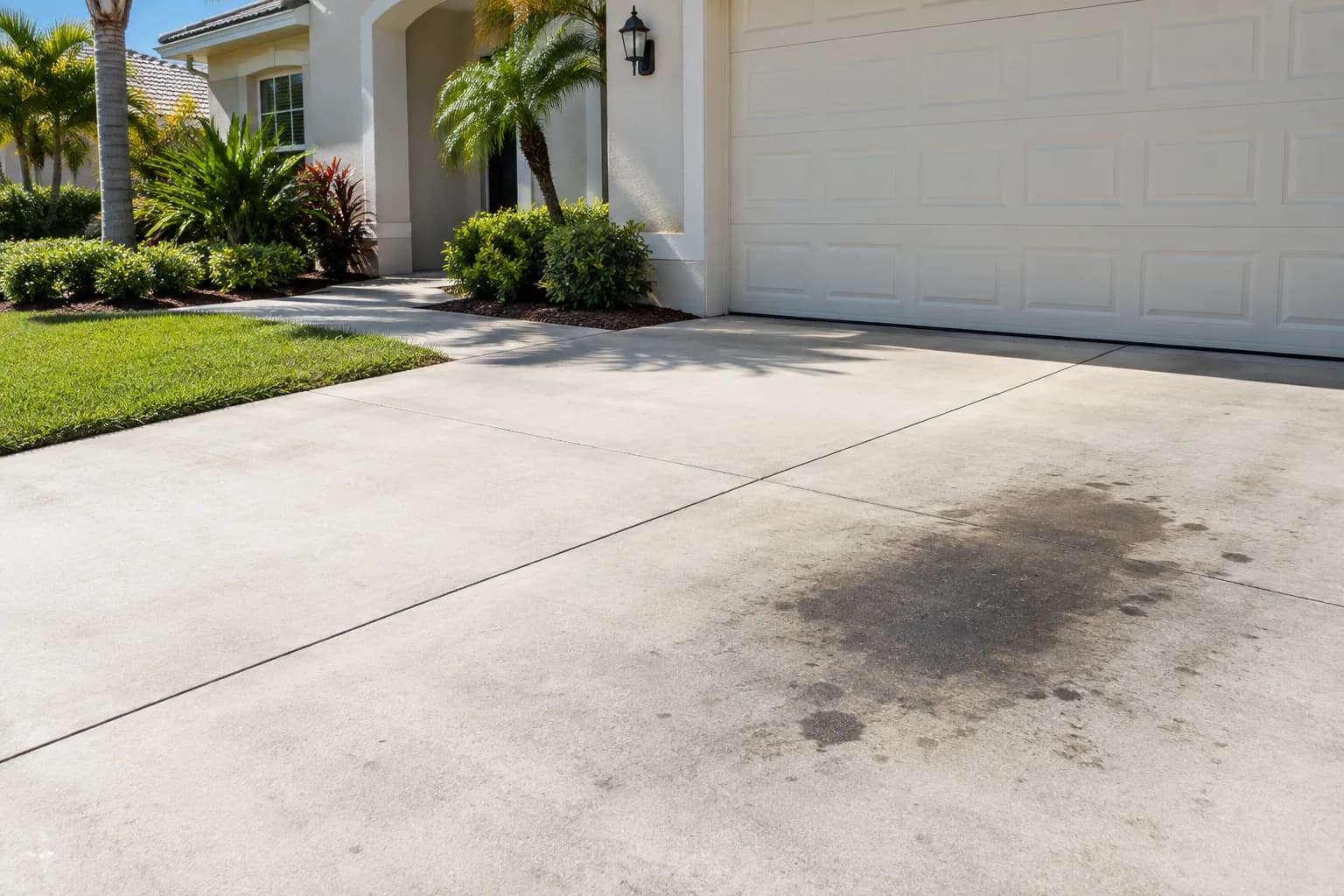
Fresh oil stains usually come out of a concrete driveway with a degreaser followed by pressure washing. Old stains that have soaked deep into the concrete usually fade a great deal but leave a light shadow, because the oil is inside the surface rather than on it. Pavers respond similarly, and a badly stained paver can simply be replaced.
What to expect
| Stain | Likely result |
|---|---|
| Fresh drip, days old | Usually comes out completely |
| Months old | Fades a great deal, may leave a faint mark |
| Years old, soaked in | Lighter, with a shadow that stays |
| On pavers | Similar, and a single paver can be swapped out |
Why old oil stays
Concrete is porous. Oil soaks down into it over time, below the reach of a surface clean. Pressure washing and a degreaser lift what is near the top, and each cleaning after that lifts a little more, but deep oil rarely disappears entirely.
What to do now
- Blot fresh spills with an absorbent such as cat litter, then sweep it up
- Do not hose a fresh spill, which spreads it
- Put a drip pan under a car that is leaking until it is fixed
- Have the driveway cleaned sooner rather than later; fresh stains are the ones that lift
The rest of the driveway
Oil is usually one patch. The rest of the drive is dirt, tire marks and the black growth that settles into shaded concrete, and a surface cleaner takes that off evenly so the clean section and the old stain are not the only two colors on the drive.