Window Cleaning
How to Clean Sliding Door Tracks, and Why the Weep Holes Matter
By Solpath Window Detailing · Published · Updated
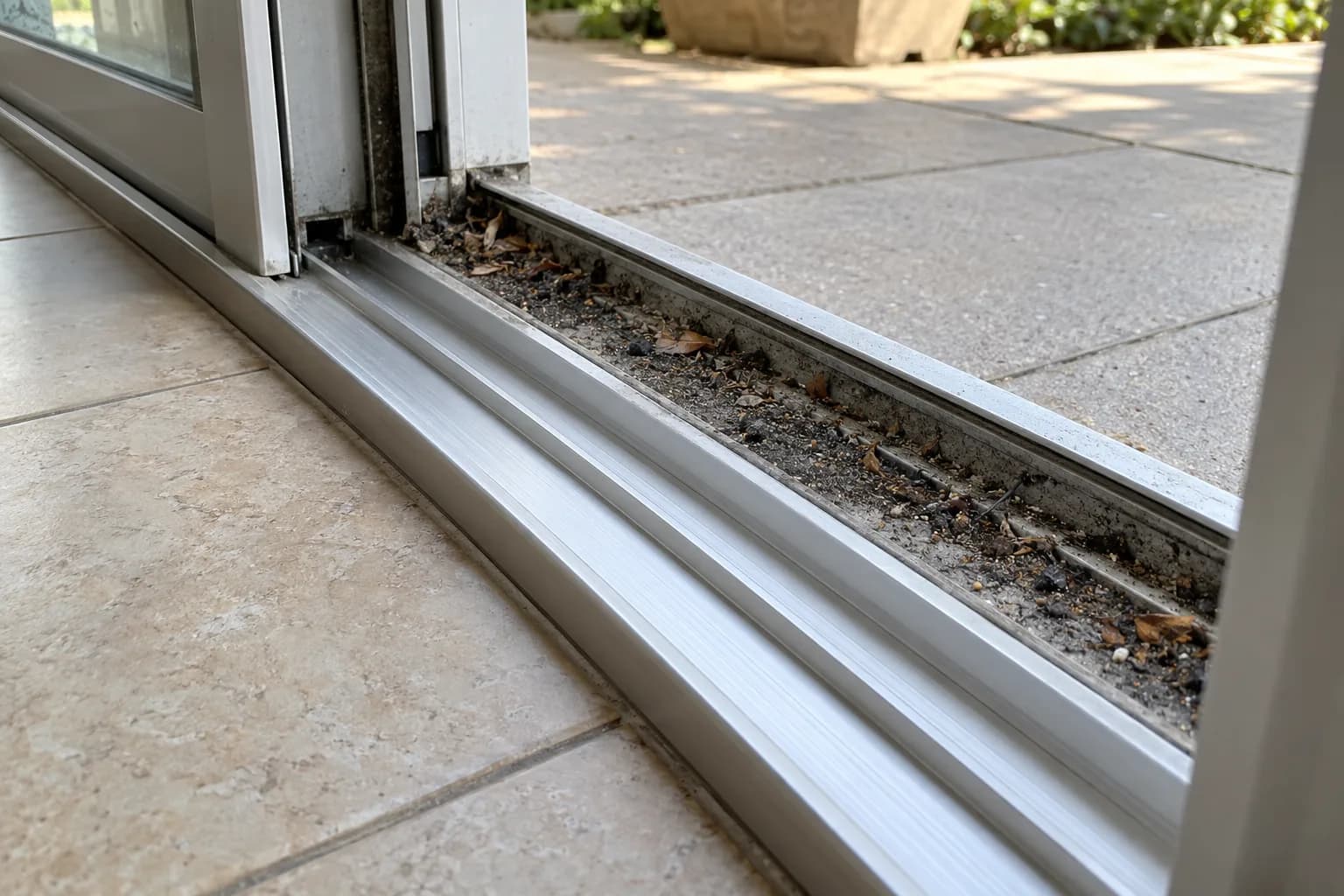
To clean a sliding door track, vacuum out the loose sand and debris while the track is dry, scrub it with a stiff brush and a little soapy water, work the corners with a detail brush, and wipe it dry. Then clear the weep holes so water can drain. Do not oil or grease the track, because it holds grit. A clean track often makes a heavy door slide more easily.
Why vacuum first
Wetting a dirty track turns the grit into a paste that packs into the corners and doubles the work. Vacuuming it while it is dry takes out most of what is there before any water goes in.
Step by step
- Open the door fully and vacuum the track with a crevice tool
- Scrub the track with a stiff brush and a little soapy water
- Work the corners with a small detail brush
- Wipe it all out with a damp cloth, then dry it
- Clear the weep holes gently with a pipe cleaner or a thin wire
- Run the door through its full travel a few times to check it moves freely
What the weep holes do
Sliding doors and windows are built to let rain into the sill track and drain it back out through small weep holes at the bottom of the frame. When those holes block, water has nowhere to go during a storm except over the sill and onto the floor.
When a slider still drags
If the door is still heavy once the track is clean, the rollers are usually worn or out of adjustment. That is a job for a door or glass company. Oil and grease in the track make it worse, because they hold the sand that wears the rollers out in the first place.
Screens have tracks too
Screen door tracks and window screen frames collect the same debris. Screens come out, get washed, and go back in the opening they came from, and their tracks get the same vacuum and wipe.