Exterior Surfaces
How to Clean a Pool Screen Enclosure Without Damaging It
By Solpath Window Detailing · Published · Updated
A pool screen enclosure is cleaned at low pressure with a cleaning solution, working from the top down: roof panels, then side panels, then the frame and kick plates, rinsing thoroughly as you go. A pressure washer tears screen mesh and pops out the spline that holds it. If the screen is brittle or already torn, cleaning will not fix it and rescreening is the answer.
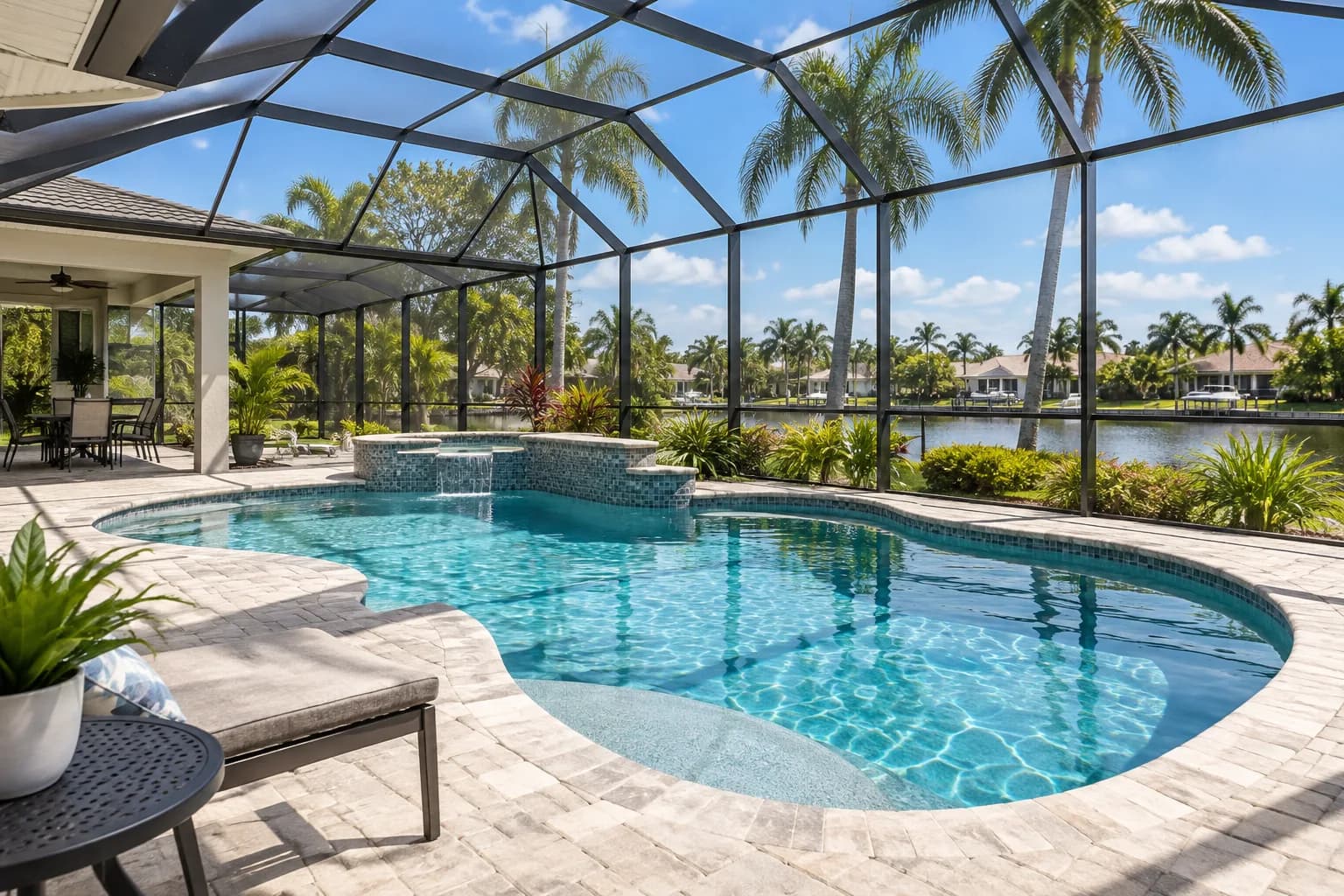
Why enclosures go gray
Screen mesh traps whatever the wind carries: dust, pollen, leaf debris and, twice a year, lovebugs. Humidity grows mildew on the tops of the frame and on screens that stay in shade. From the pool it all reads as one gray film over the view.
How to do it properly
- Cover or move anything underneath that should not get wet
- Wet down the plants around the enclosure
- Apply the cleaning solution at low pressure, from the top down
- Give it time to work instead of scrubbing hard
- Rinse thoroughly, top to bottom, so nothing dries onto the mesh
- Wipe the frame and kick plates, and rinse the pool deck at the end
What not to do
- Put a pressure washer on the screens
- Climb onto the enclosure roof
- Let the solution dry on the mesh or the deck
- Scrub screen that has gone brittle, which tears
When it needs rescreening instead
Screen that has gone brittle in the sun, is torn, or has pulled away from the frame will not come back with cleaning, and washing it can finish it off. Rescreening is a separate trade. If we see that at the quote, we will tell you before any cleaning is booked.
How often
Once or twice a year keeps most enclosures clear. Enclosures under trees, backing onto open land or beside a lake collect more and may need it more often.
It makes sense to clean the sliders and windows behind the enclosure at the same time, because a dirty screen keeps dropping dust back onto clean glass.