Exterior Surfaces
Green and Black Stains on Stucco: What They Are and How They Come Off
By Solpath Window Detailing · Published · Updated
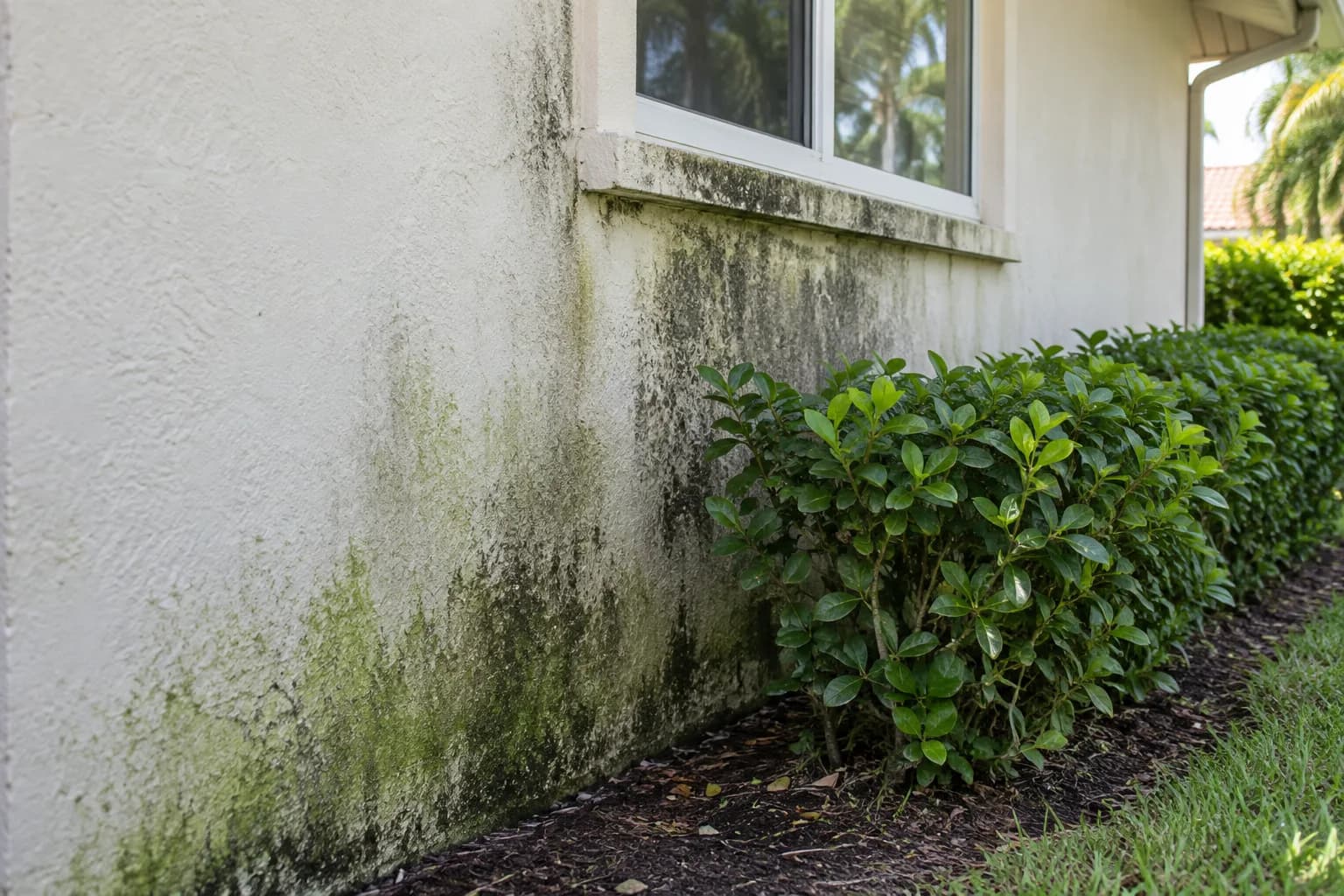
Green stains on stucco are usually algae and black stains are usually mildew, both growing where walls stay damp and shaded. They come off with soft washing: a cleaning solution applied at low pressure, left to work and rinsed. Pressure washing drives water into the wall and can strip paint. Orange staining is rust from sprinkler water and needs a rust treatment instead.
Read the color
| Color | Usually | What removes it |
|---|---|---|
| Green | Algae on damp, shaded walls | Soft washing |
| Black or dark gray | Mildew and mold growth | Soft washing |
| Orange or brown fans | Rust from well-water sprinklers | A rust remover made for masonry |
| White and chalky | Old paint breaking down | Washing removes the chalk; the paint needs redoing |
| Streaks under windows | Dirt washing off the sills | Soft washing, then cleaning the sills |
Where it grows first
North-facing walls, walls behind hedges, the strip just above the ground where sprinklers reach, and anywhere a tree keeps the sun off. In South Florida humidity that is enough for growth to take hold within a season.
Why pressure washing is the wrong tool
Stucco is porous and often has hairline cracks. High pressure forces water into them, and it can lift paint and scar the texture. It also takes off the visible growth without killing what is left in the surface, so the stain comes back quickly.
Soft washing kills the growth with a solution and rinses it away at low pressure, which is why the wall stays clean for longer.
Keeping it off
- Turn sprinkler heads so they stop soaking the walls
- Trim hedges back from the house so the wall can dry
- Clear gutters and downspouts that spill onto the same patch every storm
- Treat new growth early, before it roots into the texture