Window Cleaning
Why Do My Windows Streak After Cleaning?
By Solpath Window Detailing · Published · Updated
Windows usually streak because the cleaning solution dried before it was removed, most often from working in direct sun. The other common causes are too much soap, paper towels or a linty cloth, a worn squeegee blade, hard water in the bucket, and residue from an earlier product. Rinse well, work in the shade, squeegee instead of wiping, and detail the edges with a clean microfiber cloth.
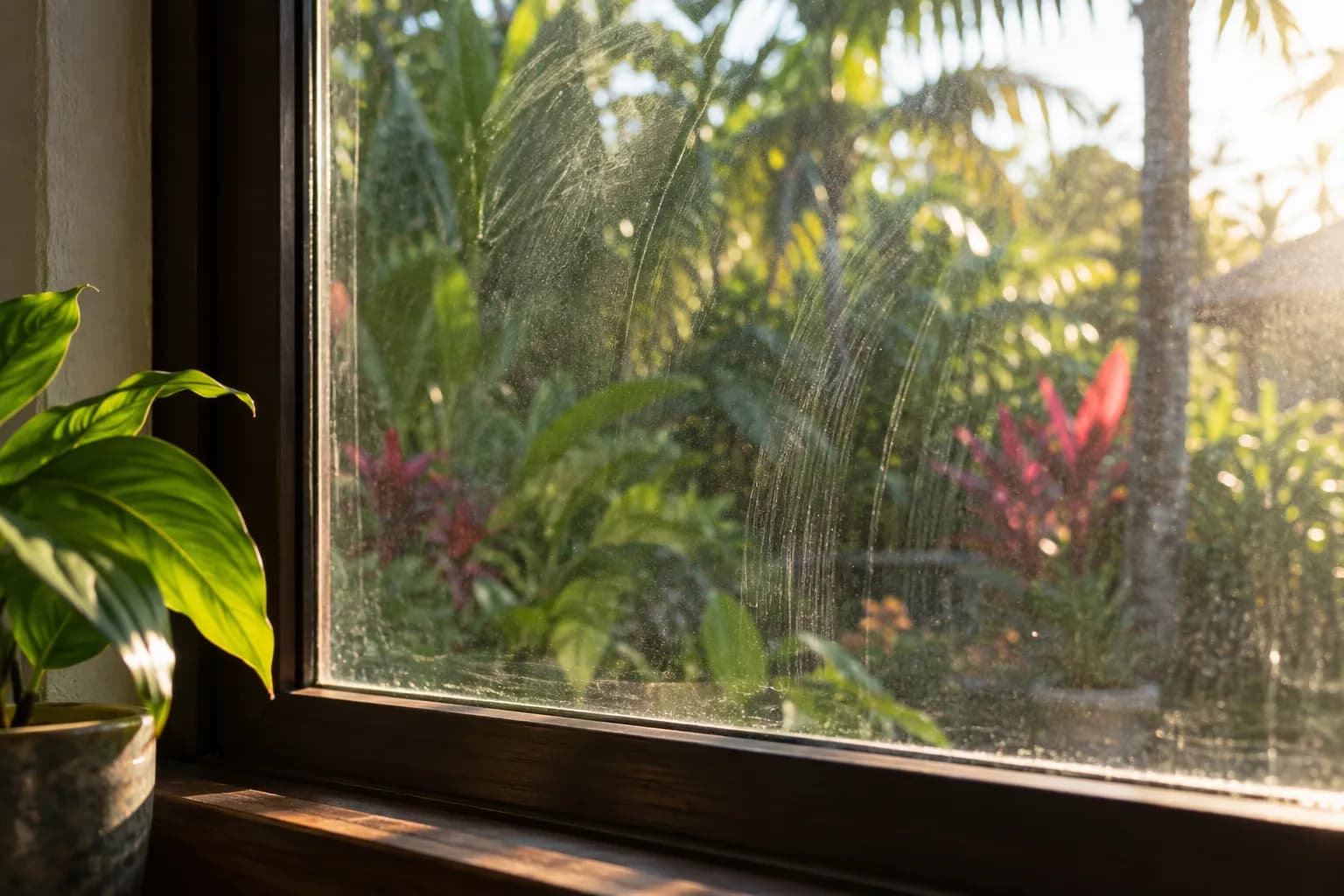
The six common causes
| Cause | What it looks like | The fix |
|---|---|---|
| Working in direct sun | Drying marks across the whole pane | Clean the shaded side, or wait for the sun to move |
| Too much soap | A smeary film that shows at an angle | Use less product and rinse the pane first |
| Paper towels or a linty cloth | Lint and fine wipe marks | Squeegee the water off and detail with a clean microfiber cloth |
| A worn or nicked squeegee blade | A thin line in the same place on every pull | Replace the rubber; it wears out |
| Hard water in the bucket | White spots once it dries | Use filtered or softened water for the last rinse |
| Old product residue | Streaks that come back however you clean | Wash the build-up off properly, then keep it simple |
Streaks on the inside
Interior glass collects a film from cooking, candles and air fresheners that most spray cleaners just move around. It needs a proper wash, not a spray and a wipe.
If you cannot tell which side a streak is on, that is the best argument for cleaning both sides on the same day.
Marks that are not streaks
White spots that do not change when the glass is wet are mineral deposits from sprinklers. Fine arcs that catch the light are scratches, often from a dry cloth dragged over grit. Haze between the panes of a double-glazed unit is a failed seal. None of those will clean off, and it saves an afternoon to know that before you try.
How we avoid them
We wash, squeegee and then detail every edge and corner by hand, and we check the glass in daylight before leaving. Streaks show at the edges first, which is why the detailing is where most of the time goes.